Optimizing Study Habits: A Guide to the UAE Academic Calendar
Introduction: The Unique Rhythm of the UAE School Year
The academic year in the UAE, particularly for schools following the international (September start) calendar, has a unique rhythm. It is shaped by the three-term structure, the timing of major international examinations (IGCSE, A-Levels, IB), public holidays, and cultural observances like Ramadan.
Effective study planning requires aligning academic goals with this specific calendar. Students who fail to anticipate the intensity of certain terms or utilize the breaks effectively often find themselves overwhelmed during critical exam periods.
To optimize study habits according to the UAE academic calendar, students should use Term 1 (Sept-Dec) for building foundations and establishing routines. Term 2 (Jan-Mar) is the most intense period, requiring focused preparation for mock exams and internal assessments, often coinciding with Ramadan. Term 3 (Apr-Jun) is dedicated to final exam revision and execution. Effective planning involves utilizing breaks for consolidation and adapting strategies to the local context.
This guide provides a term-by-term breakdown of the typical UAE academic calendar, offering strategic study tips for students in the British and IB curricula.
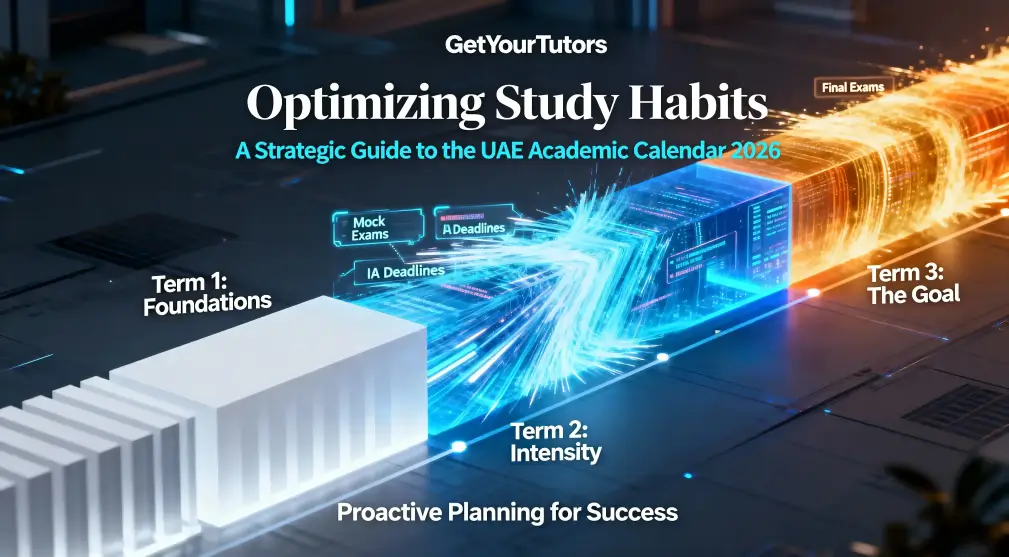
To optimize study habits according to the UAE academic calendar, students should use Term 1 (Sept-Dec) for building foundations and establishing routines. Term 2 (Jan-Mar) is the most intense period, requiring focused preparation for mock exams and internal assessments, often coinciding with Ramadan. Term 3 (Apr-Jun) is dedicated to final exam revision and execution. Effective planning involves utilizing breaks for consolidation and adapting strategies to the local context.
This guide provides a term-by-term breakdown of the typical UAE academic calendar, offering strategic study tips for students in the British and IB curricula.
Table of Contents
- The UAE Three-Term Structure Overview
- Term 1 (Autumn/Winter): Foundations and Routines
- Term 2 (Spring): Intensity and Mock Exams
- Term 3 (Summer): The Final Push and Examinations
- Navigating UAE Specifics: Ramadan and the Long Summer
- Strategic Tutoring Aligned with the Calendar
- Conclusion: Proactive Planning for Success
1. The UAE Three-Term Structure Overview
While specific dates vary slightly by school and are confirmed by the KHDA (Knowledge and Human Development Authority) in Dubai or other emirate-specific authorities, the general structure for international curriculum schools is consistent.
Term | Typical Dates | Duration | Key Academic Milestones (IB/British) | Key Breaks |
Term 1 | Late Aug/Early Sept – Mid Dec | ~14 weeks | Settling in, foundational content, mid-term assessments, initial IB IAs. | Half-Term (Oct), Winter Break (3 weeks) |
Term 2 | Early Jan – Late March | ~12 weeks | Mock Exams (IGCSE/A-Level/IB), IB EE/TOK deadlines, Ramadan (Feb/Mar). | Half-Term (Feb), Spring Break (2-3 weeks) |
Term 3 | Mid April – Early July | ~12 weeks | Final IB/A-Level/IGCSE Exams (May/June), end-of-year assessments. | Eid holidays, Summer Break (8-9 weeks) |
2. Term 1 (Autumn/Winter): Foundations and Routines
Dates: September to December
Term 1 is about starting strong and establishing the habits needed for the rest of the year. It is the longest term but often feels less pressured.
Academic Focus by Year Group
- Primary/Early Secondary: Focus on settling into new routines and ensuring foundational literacy and numeracy skills are secure after the long summer break.
- IGCSE/MYP (Years 10-11 / Grades 9-10): Begin covering the core content of the syllabus. It is crucial to grasp the fundamental concepts now.
- A-Level/IB DP (Year 12 / Grade 11): The critical transition period. Students must adapt quickly to the increased demands of independent learning. This is the time to address the challenges of the jump from IGCSE to A-Levels or MYP to DP. IB students often begin planning their Extended Essay and initial Internal Assessments (IAs).
Term 1 Study Strategies
- Establish Organization Systems: Implement a robust system for note-taking, managing deadlines, and organizing resources from Day 1.
- Weekly Consolidation: Do not let knowledge gaps accumulate. Review the week’s content every weekend.
- Utilize the October Half-Term: Use this break for consolidation and addressing any initial difficulties, rather than taking the entire week off.
- Prepare for End-of-Term Exams: Term 1 usually concludes with the first major set of internal assessments before the Winter Break.
3. Term 2 (Spring): Intensity and Mock Exams
Dates: January to March
Term 2 is typically the shortest but most intense academic period of the year in the UAE. It also coincides with Ramadan.
Academic Focus by Year Group
- IGCSE/A-Level/IB DP (Exam Years): The primary focus is Mock Examinations. These are crucial dress rehearsals for the final exams and heavily influence predicted grades for university applications (UCAS).
- IB DP (All Years): A critical period for Internal Assessments. Many deadlines for IAs, the TOK essay, and the EE fall during Term 2. The workload is immense.
- MYP 5: Focus on completing the Personal Project and preparing for eAssessments (if applicable).
Term 2 Study Strategies
- Prioritize Mock Exam Revision: Start revising early in the term, utilizing the Winter Break effectively. Create a detailed revision timetable covering all subjects.
- Master Time Management (IB Students): Use a detailed planner to balance mock revision with the deadlines for the Core components and IAs. The strategies for managing IB Internal Assessments become critical here.
- Focus on Past Papers: Shift from content learning to application and exam technique using past papers.
- Adapt to Ramadan: (See Section 5). Adjust study schedules to accommodate reduced school hours and fasting.
- Utilize the Spring Break Wisely: The break at the end of Term 2 should be used for rest, followed by a structured start to the final revision phase for Term 3.
4. Term 3 (Summer): The Final Push and Examinations
Dates: April to July
Term 3 is dominated by the final external examinations for older students.
Academic Focus by Year Group
- IGCSE/A-Level/IB DP (Exam Years): The main examination period runs from late April through June. Students often have study leave before the exams begin.
- Non-Exam Years: Focus on end-of-year internal exams, which determine progression to the next grade.
- Year 12 / Grade 11: End-of-year exams are critical for UCAS predicted grades. This is also the time to finalize university choices and begin working on personal statements.
Term 3 Study Strategies
- Intensive Revision: Focus entirely on exam technique, timed practice, and understanding the mark schemes specific to your exam board (e.g., Edexcel, Cambridge, AQA).
- Maintain Physical and Mental Health: Ensure adequate sleep, nutrition, and exercise. The exam period is a marathon, and the rising temperatures in the UAE can add to the stress.
- Targeted Support: Use study leave effectively. Identify weaknesses based on mock exam results and focus on those areas.
- Post-Exam Planning (Year 12/Grade 11): Once exams are over, shift focus to university preparation and bridging the gap to the final year.
5. Navigating UAE Specifics: Ramadan and the Long Summer
The UAE context presents unique challenges that require specific strategies.
Studying During Ramadan (Approx. Feb 18 to Mar 19)
Ramadan is expected to fall during the critical period of Term 2 (likely overlapping with mock exams).
- Adjusted School Hours: Schools in the UAE operate reduced hours during Ramadan.1
- Energy Management: Fasting students need to manage their energy levels carefully.
- Optimized Study Times:
- Post-Suhour (Early Morning): Often the most productive time for deep work and complex topics before the fast begins.
- Post-Iftar (Evening): Best for lighter revision and consolidation after breaking the fast.
- Prioritize Sleep and Nutrition: Adequate rest and nutritious meals during non-fasting hours are crucial for cognitive function.
- Coordination: Communicate with teachers and tutors to adjust schedules and expectations.
Utilizing the Long Summer Break (July-August)
The UAE summer break is long (8-9 weeks) and hot. While rest is essential, this period should also be used strategically to prevent the “summer slide.”
- Consolidation and Bridging: Review the previous year’s content and get a head start on the next year’s syllabus.
- Skill Development: Focus on developing ATL skills (IB) or study techniques.
- Work Experience/Internships: Gain relevant experience for university applications.
- Structured Summer Programs: Consider structured revision courses or bridging programs.
6. Strategic Tutoring Aligned with the Calendar
Students applying from Dubai are competing in a global pool. Both the British Curriculum and the IB Curriculum are well-established and respected in the UAE.
The demand for home tutoring in Dubai often peaks during specific times of the year. Engaging support strategically is key.
- Term 1 (Proactive Support): Ideal time to establish regular tutoring sessions to build a strong foundation, address early challenges, and develop effective study habits.
- Term 2 (Targeted Intervention): Focus on intensive revision for mock exams, guidance on IAs/EE, and managing the high workload, especially during Ramadan.
- Term 3 (Exam Mastery): Focus on past paper practice, exam technique, and targeted support for specific weaknesses before the final exams.
- Summer Break (Preparation): Bridging programs and head-start tutoring to prepare for the upcoming academic year.
7. Conclusion: Proactive Planning for Success
Success in the demanding British and IB curricula in the UAE requires more than just hard work; it requires strategic planning aligned with the academic calendar. By understanding the rhythm of the school year, anticipating the challenges of each term, and adapting study habits to the local context (including Ramadan and the long summer), students can manage their workload effectively and achieve their academic goals.
Take the Next Step
Need help creating a personalized study plan aligned with the UAE academic calendar?
At GetYourTutors.com, our academic advisors and expert tutors understand the specific demands of the Dubai educational landscape.